Moving to Austin, Texas in 2026: Real Cost of Living, Property Taxes & Neighborhoods

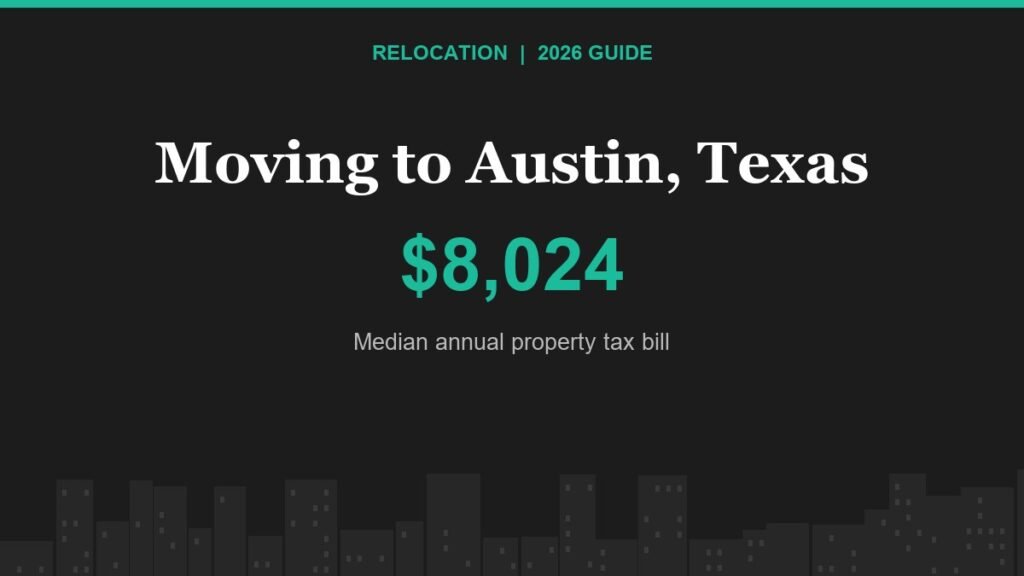
Moving to Austin, Texas means no state income tax, but a median home value of $555,300 and a typical property tax bill of $8,024 a year, far above the national median of $3,119. The median one-bedroom rents for $1,544, and Austin’s median household income of $93,658 is well above the Texas median.
The trade is simple: you keep more of your paycheck but pay more to own a home. If you are also comparing Austin with the Pacific Northwest, see our guide to whether Oregon is a good place to live.
Austin Cost of Living at a Glance
| Metric | Austin | Travis County | Texas | United States |
|---|---|---|---|---|
| Median household income | $93,658 | $99,611 | $78,476 | $80,734 |
| Median gross rent | $1,729 | $1,744 | $1,403 | $1,413 |
| 1BR median gross rent | $1,544 | $1,553 | $1,237 | $1,235 |
| 3BR median gross rent | $2,202 | $2,195 | $1,650 | $1,584 |
| Median home value | $555,300 | $523,000 | $283,800 | $332,700 |
| Median annual property tax | $8,024 | $7,727 | $4,232 | $3,119 |
| Avg. monthly electric (state) | $163.72 | $163.72 | $163.72 | $142.26 |
| Mean commute | 23.7 min | 25.2 min | 26.7 min | 26.4 min |
| State income tax | None | None | None | Varies |
Housing, income and commute figures are from the Census Bureau’s 2020–2024 American Community Survey. Electric bills are 2024 EIA averages.
Austin Property Tax Rates
Property tax is the cost newcomers most often underestimate. The median Austin owner pays $8,024 a year, an implied 1.44% of home value, compared with 0.70% in California and 0.94% nationally. Texas has no state property tax; the bill is the sum of rates set by the city, county, school district, Austin Community College, the Central Health hospital district and, in some neighborhoods, special districts. A home inside Austin city limits typically faces combined rates of roughly 2% of taxable value.
Rates are set each fall, so check the current figures for any address through the Travis County tax rate notices and look up its appraised value at the Travis Central Appraisal District.
Homestead Exemptions
Owner-occupants get meaningful relief. In November 2025, Texas voters approved constitutional amendments that raised the school district homestead exemption from $100,000 to $140,000 and increased the additional exemption for homeowners 65 or older or disabled to $60,000. Texas also limits annual increases in a homestead’s taxable value to 10%. See the Comptroller’s exemptions guide for eligibility, and apply after you move in, since exemptions are not automatic.
Housing and Rent in Austin
A 10% down payment on the median Austin home is $55,530. Only 43.4% of Austin households own their home, well below the Texas rate of 62.6%. Renters pay $1,544 for the median one-bedroom and $2,202 for the median three-bedroom.
| Unit | Monthly rent | Annual rent | Income needed at 30% |
|---|---|---|---|
| One-bedroom | $1,544 | $18,528 | $61,760 |
| Three-bedroom | $2,202 | $26,424 | $88,080 |
The median three-bedroom calls for about $88,080 of gross income under the 30% guideline, below the city’s $93,658 median household income. Census medians include long-term tenants, so a new lease may cost more.
Taxes and Take-Home Pay
Texas has no personal income tax. The state sales tax is 6.25%, and local taxes bring the combined rate in Austin to 8.25%, the maximum allowed in Texas; the Comptroller’s sales tax page has a rate locator for any address.
| Single filer, 2026 | $75,000 salary | $110,000 salary |
|---|---|---|
| Federal income tax | $7,670 | $15,370 |
| Social Security and Medicare | $5,738 | $8,415 |
| State income tax | $0 | $0 |
| Monthly take-home | $5,133 | $7,185 |
| Left after median 1BR | $3,589 | $5,641 |
| Left after median 3BR | $2,931 | $4,983 |
These estimates assume W-2 wages, no dependents, no pre-tax contributions, and the 2026 federal standard deduction of $16,100.
Moving From California to Austin
Many movers come from California. The median California home is worth $734,700, $179,400 more than in Austin, and the median California one-bedroom rents for $1,780, $236 more. California taxes wages at up to 12.3%, plus 1% above $1 million, while Texas taxes none.
The surprise is the property tax bill. Although Austin homes are cheaper, the median Austin owner pays $2,900 a year more in property tax than the median California owner, because California’s Proposition 13 limits rates and assessment increases. Run the numbers on a specific home, including the homestead exemption, before assuming you will save.
Utilities, Weather and Living in Austin, TX
Texas households averaged $163.72 a month for electricity in 2024, above the U.S. average of $142.26, according to the EIA. Summers are long and hot, so cooling costs peak from June through September. Austin Energy, the city-owned utility, serves most of the city, while many suburbs choose a retail electricity provider.
Austin’s draw is its job market in technology, government, the University of Texas and healthcare, plus live music, food and access to lakes and the Hill Country. The downsides include traffic on I-35 and MoPac, summer heat, and flash flooding in some low-lying areas, so check flood maps before you buy.
Austin Neighborhoods and Suburbs
| Place | 1BR | Home value | Property tax | Income | Commute |
|---|---|---|---|---|---|
| Austin | $1,544 | $555,300 | $8,024 | $93,658 | 23.7 min |
| Round Rock | $1,436 | $418,600 | $6,424 | $99,287 | 24.9 min |
| Cedar Park | $1,472 | $513,600 | $8,893 | $129,545 | 25.5 min |
| Pflugerville | $1,605 | $402,400 | $6,543 | $117,799 | 27.4 min |
| Georgetown | $1,510 | $429,100 | $6,247 | $95,062 | 28.2 min |
| Kyle | $1,411 | $334,600 | $6,170 | $90,323 | 36.4 min |
| Dallas | $1,354 | $320,700 | $5,075 | $70,518 | 25.7 min |
| Houston | $1,194 | $277,800 | $4,198 | $64,813 | 27.2 min |
| Texas | $1,237 | $283,800 | $4,232 | $78,476 | 26.7 min |
Suburbs such as Round Rock, at $418,600, and Kyle, at $334,600, offer cheaper homes than Austin, but Kyle’s 36.4-minute mean commute shows the cost in time. Property tax bills remain high across the region. For other Texas options, read our upcoming guides to living in Dallas, the cost of living in Galveston and first-time homebuyer programs in El Paso.
After moving, new residents have 30 days to register a vehicle and 90 days to get a Texas driver license, according to the Texas DMV.
Getting Around Austin
Austin is largely car-dependent. Capital Metro runs buses and a commuter rail line, but most residents drive, and peak-hour traffic on I-35, MoPac and US 183 is a daily frustration. Budget for a car payment, insurance, fuel and toll roads if you plan to live in the suburbs and commute downtown. The city’s 23.7-minute mean commute is short by big-city standards, but suburban commutes run longer, as the table above shows.
Who Should Move to Austin?
Austin works best for renters and buyers with salaries above the local median, remote workers whose pay is set elsewhere, and people coming from high-tax states who will feel the absence of an income tax. It is a tougher fit for retirees on fixed incomes who want to own, since property taxes continue for life, although the over-65 exemption and a school tax ceiling for seniors soften the blow. Families should compare school districts as well as tax rates, since the district shapes both the bill and the schools.
Before you sign, price a specific home with its current rates and exemptions, check the flood map, and drive the commute at rush hour.
Frequently Asked Questions
Is it worth moving to Austin in 2026?
Austin can be worth it for people with strong salaries, especially in technology, because Texas has no income tax. The median home value is $555,300, below California levels, but the median property tax bill is $8,024 a year. Weigh that bill, summer heat and traffic against the tax savings on your wages.
What are Austin property tax rates?
Austin homeowners pay combined rates from the city, Travis County, the school district, Austin Community College and Central Health, typically around 2% of taxable value. The median bill is $8,024. Homestead exemptions, including a $140,000 school exemption approved in 2025, reduce taxable value for owner-occupants.
What salary do you need to live in Austin?
A single renter needs about $61,760 a year to keep the median one-bedroom rent at 30% of gross income. A family renting the median three-bedroom needs about $88,080. Buying the median home, with its high property tax bill, generally requires a substantially higher household income.
This article is for general information only and is not financial, tax, legal, or real estate advice. Taxes, rates, and housing costs change and vary by address and household. Confirm current figures with the relevant agency or a licensed professional before making a decision.