Living in Washington State (2026): Honest Pros, Cons, No Income Tax & Living Costs

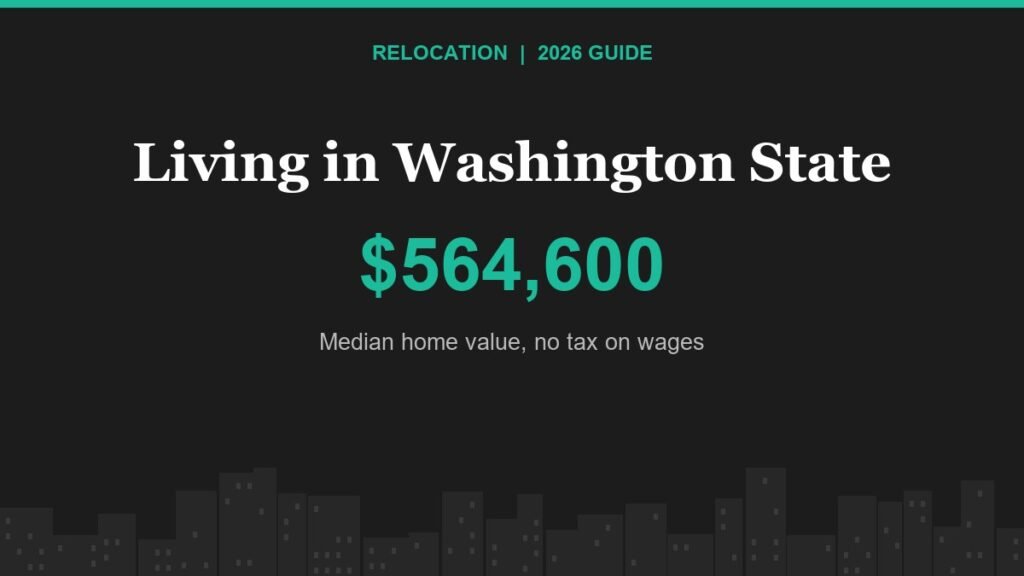
Living in Washington State means no income tax on wages, but a median home value of $564,600 and a median one-bedroom rent of $1,568, both higher than in Oregon. Washington’s median household income of $98,141 is well above the national $80,734, and its electricity is cheaper than the national average.
The costs show up elsewhere: a 6.5% state sales tax plus local taxes, payroll premiums for paid leave and long-term care, and some of the most expensive housing in the country around Seattle. If you are also considering the state to the south, start with our guide to whether Oregon is a good place to live.
Washington Cost of Living at a Glance
| Metric | Washington | Oregon | United States |
|---|---|---|---|
| Median household income | $98,141 | $83,011 | $80,734 |
| Median gross rent | $1,760 | $1,525 | $1,413 |
| 1BR median gross rent | $1,568 | $1,301 | $1,235 |
| 3BR median gross rent | $2,058 | $1,850 | $1,584 |
| Median home value | $564,600 | $477,600 | $332,700 |
| Median annual property tax | $4,556 | $3,876 | $3,119 |
| Avg. monthly electric bill | $113.68 | $129.62 | $142.26 |
| Mean commute | 26.6 min | 23.0 min | 26.4 min |
| Income tax on wages | None | 4.75%–9.9% | Varies |
| State sales tax | 6.5% plus local | None | Varies |
Housing, income and commute figures are from the Census Bureau’s 2020–2024 American Community Survey. Electric bills are 2024 EIA averages.
The Pros of Living in Washington State
No Income Tax on Wages
Washington does not tax wages or salaries. For a single worker, that is worth thousands of dollars a year compared with Oregon, as our take-home table below shows. Retirees also pay no state tax on Social Security, pensions or IRA withdrawals.
Higher Incomes
Washington’s median household income is $15,130 above Oregon’s and $17,407 above the national median. Seattle’s median of $123,860 is driven by technology, aerospace, healthcare and trade, but strong wages are concentrated in the Puget Sound region.
Cheap Electricity
Thanks largely to hydropower, Washington households paid an average of $113.68 a month for electricity in 2024, compared with $129.62 in Oregon and $142.26 nationally. The average price was 11.9 cents per kilowatt-hour, against 16.48 cents nationally.
Outdoor Access
Mountains, Puget Sound, the Pacific coast and the dry, sunny east side are all within a few hours’ drive of most cities. For many movers, that range of landscapes is the main draw.
The Cons of Living in Washington State
Expensive Housing
Washington’s median home value is $87,000 higher than Oregon’s and $231,900 above the national median. In Seattle it reaches $938,600, with a median one-bedroom rent of $1,899. The typical Washington owner pays $4,556 a year in property tax, an implied 0.81% of home value.
Sales Tax on Everyday Spending
The 6.5% state sales tax is topped up by city and county taxes. The Department of Revenue’s fourth-quarter 2026 rate list shows combined rates of 10.4% in some King County cities, and you can check any address with its local rate lookup. As an illustration, a household that spends $20,000 a year on taxable goods at a 9% combined rate pays about $1,800 in sales tax.
Most groceries and prescription drugs are exempt, which softens the burden for everyday essentials. The tax bites hardest on big purchases. A new car, furniture for a whole house or a major appliance bought in Washington carries the full combined rate, while the same purchase in Oregon carries no sales tax at all. Restaurant meals, household goods and many services are also taxable. For a family furnishing a new home after a move, that difference can easily run to thousands of dollars in the first year, so it belongs in any honest moving budget.
Taxes Beyond Wages
Washington taxes long-term capital gains at 7% above an annual standard deduction ($278,000 for 2025) and 9.9% on taxable gains above $1 million. Its estate tax applies above a $3 million exclusion for deaths on or after July 1, 2026, after a 2026 law reversed the previous year’s increase; see the state’s estate tax tables. In March 2026 the governor also signed a 9.9% tax on income above $1 million, scheduled to start in 2028 and expected to face court challenges. It does not affect typical earners.
Payroll Premiums
Workers pay two state premiums. The Paid Family and Medical Leave premium is 1.13% of wages in 2026, with employees covering about 71% of it, or roughly 0.81% of pay. The WA Cares Fund long-term care premium is 0.58% of wages.
Gray Winters and Natural Hazards
West of the Cascades, winters are long, gray and damp. Western Washington also faces Cascadia earthquake risk, and the east side faces wildfire smoke and summer heat. The state’s Emergency Management Division publishes preparedness guidance for each hazard.
Washington Cost of Living vs Oregon
| Single filer, 2026 | Washington | Oregon | Washington advantage |
|---|---|---|---|
| $75,000 salary, annual take-home | $60,552 | $56,009 | $4,543 |
| $110,000 salary, annual take-home | $84,689 | $77,419 | $7,270 |
These estimates include federal tax under the 2026 standard deduction of $16,100, Social Security and Medicare, Washington’s two payroll premiums, and Oregon’s income tax, 0.1% transit tax and 0.6% Paid Leave contribution, using Oregon’s 2026 tables. They assume W-2 wages, no dependents and no local taxes.
The wage tax savings are real, but Oregon has no sales tax and lower housing costs. A Washington household spending heavily on taxable goods gives back part of that gap. Housing usually decides the comparison: Washington’s median one-bedroom costs $267 a month more than Oregon’s, or $3,204 a year.
One trap catches many movers: living in Vancouver, Washington does not avoid Oregon income tax if you work in Oregon. Oregon taxes nonresidents on wages earned there.
Best Cities in Washington State
| City | 1BR rent | Home value | Household income | Commute |
|---|---|---|---|---|
| Seattle | $1,899 | $938,600 | $123,860 | 26.0 min |
| Tacoma | $1,417 | $479,600 | $85,884 | 28.8 min |
| Vancouver | $1,517 | $462,400 | $81,338 | 23.2 min |
| Bellingham | $1,339 | $627,500 | $66,755 | 18.1 min |
| Olympia | $1,341 | $486,200 | $81,302 | 20.0 min |
| Bremerton | $1,328 | $439,400 | $74,940 | 25.3 min |
| Spokane | $963 | $363,500 | $70,064 | 20.6 min |
| Port Angeles | $792 | $370,200 | $62,606 | 16.7 min |
| Kennewick | $1,051 | $370,700 | $73,576 | 21.3 min |
| Richland | $1,225 | $436,700 | $95,813 | 20.4 min |
| Pasco | $930 | $376,300 | $85,586 | 22.5 min |
The best city depends on your budget. Seattle offers the highest incomes and the highest costs. Spokane, with a median home value of $363,500, and the Tri-Cities, where Kennewick’s median is $370,700, cost far less but pay less too, and have hot, dry summers.
We cover the main options in detail: our Bellingham cost of living guide looks at a college town near the Canadian border, our analysis of whether Tacoma is a good place to live covers Seattle’s more affordable neighbor, our Port Angeles cost of living guide examines the Olympic Peninsula, and our guide to moving to Bremerton explains life across the water from Seattle.
Eastern vs Western Washington
Washington is really two states. West of the Cascades, Seattle, Tacoma, Olympia and Bellingham share mild, wet weather, high housing costs and the strongest job markets. Tacoma’s median home value is $479,600, Olympia’s is $486,200, and Bellingham’s is $627,500, all within reach of Puget Sound.
East of the mountains, the climate is drier and sunnier, with hot summers and colder, snowier winters. Housing is far cheaper: Spokane’s median home value is $363,500, and Pasco’s is $376,300. Incomes are lower too, at $70,064 in Spokane, although Richland, home to Hanford-related employers, reaches $95,813. Remote workers with Seattle-level salaries often get the best deal on the east side.
What Salary Do You Need in Washington?
Under the common guideline of spending no more than 30% of gross income on rent, the statewide median one-bedroom requires about $62,720 a year, and the median three-bedroom requires about $82,320. That is below Washington’s $98,141 median household income, but Seattle’s median one-bedroom of $1,899 calls for about $75,960. Census medians include long-term tenants, so new leases often cost more.
Moving to Washington State: First Steps
New residents have 30 days to get a Washington driver license, and you need that license before you can register a vehicle, which must also be done within 30 days. Update your employer’s payroll records so the Washington premiums are withheld correctly, and if you are leaving Oregon, file a part-year Oregon return for the year you move.
Who Should Move to Washington?
Washington works best for high earners whose pay comes from wages, especially in technology, healthcare and aerospace, and for retirees with large pensions or IRA withdrawals that Oregon would tax. It is a tougher choice for lower-income households, who pay a larger share of income in sales tax, and for buyers who want a starter home near Seattle.
Before moving, price housing in the exact city you plan to live in, check the local sales tax rate, and compare a real job offer’s take-home pay with the table above.
Frequently Asked Questions
Is it better to live in Washington or Oregon?
It depends on income and spending. Washington has no wage income tax, saving a single worker earning $75,000 about $4,543 a year compared with Oregon. Oregon has no sales tax and lower housing costs, with a median home value $87,000 below Washington’s. Higher earners usually come out ahead in Washington.
Does Washington State have an income tax?
Washington does not tax wages or salaries. It does tax long-term capital gains above an annual deduction, at 7% and 9.9% on gains above $1 million. A 9.9% tax on income above $1 million, signed in March 2026, is scheduled to begin in 2028 and is expected to face legal challenges.
What is the cost of living in Washington State?
Washington’s median one-bedroom rent is $1,568, and its median home value is $564,600, both above Oregon and the national median. Costs vary widely: Seattle’s median home value is $938,600, while Spokane’s is $363,500. Electricity averages $113.68 a month, below the national average.
What are the downsides of living in Washington State?
The main downsides are expensive housing in the Puget Sound region, combined sales tax rates above 10% in some cities, payroll premiums for paid leave and long-term care, and long, gray winters west of the Cascades. Western Washington also carries Cascadia earthquake risk, and eastern Washington sees summer wildfire smoke.
This article is for general information only and is not financial, tax, legal, or real estate advice. Taxes, rates, and housing costs change and vary by address and household. Confirm current figures with the relevant agency or a licensed professional before making a decision.