Phoenix, Arizona Cost of Living (2026): Rent, Summer Electric Bills & Salary Needed

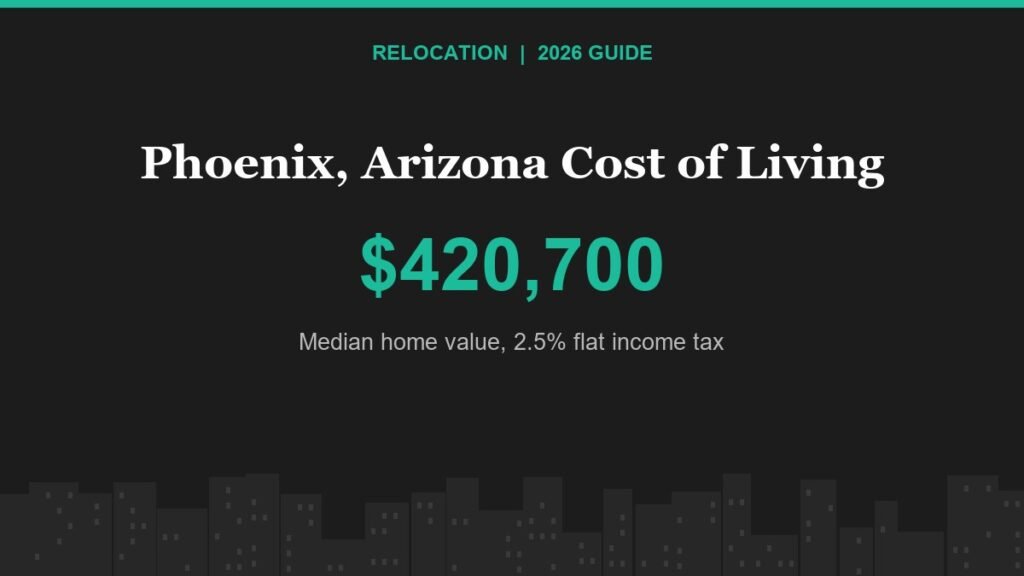
The Phoenix, Arizona cost of living centers on a median home value of $420,700 and a median one-bedroom rent of $1,355 a month, with a flat 2.5% state income tax and a 9.1% combined sales tax. Property taxes are low, but summer electricity bills are the budget item newcomers most often underestimate.
Phoenix is cheaper than many West Coast cities for buyers. Its median home value is $160,800 below Portland’s, for example. If you are weighing the desert against the Pacific Northwest, see our guide to whether Oregon is a good place to live.
Phoenix Cost of Living at a Glance
| Metric | Phoenix | Maricopa County | Arizona | United States |
|---|---|---|---|---|
| Median household income | $81,332 | $89,300 | $79,964 | $80,734 |
| Median gross rent | $1,582 | $1,708 | $1,543 | $1,413 |
| 1BR median gross rent | $1,355 | $1,453 | $1,303 | $1,235 |
| 3BR median gross rent | $1,929 | $2,027 | $1,808 | $1,584 |
| Median home value | $420,700 | $452,800 | $394,500 | $332,700 |
| Median annual property tax | $1,850 | $1,983 | $1,879 | $3,119 |
| Avg. monthly electric (state) | $160.24 | $160.24 | $160.24 | $142.26 |
| Mean commute | 25.6 min | 26.0 min | 25.4 min | 26.4 min |
Housing, income and commute figures are from the Census Bureau’s 2020–2024 American Community Survey. Electric bills are 2024 EIA averages.
Phoenix Average Rent in 2026
The Census median gross rent in Phoenix is $1,582, including tenant-paid utilities. A one-bedroom runs $1,355 and a three-bedroom $1,929, both above the Arizona medians but below Maricopa County’s. These medians include long-term tenants, so a new lease may cost more.
| Unit | Monthly rent | Annual rent | Income needed at 30% |
|---|---|---|---|
| One-bedroom | $1,355 | $16,260 | $54,200 |
| Three-bedroom | $1,929 | $23,148 | $77,160 |
Buying a Home and Property Taxes
A 10% down payment on the median Phoenix home is $42,070. Property taxes are one of the city’s real advantages: the typical owner pays $1,850 a year, an implied 0.44% of home value, compared with $3,119 nationally. About 57.3% of Phoenix households own their home. Suburbs such as Gilbert and Scottsdale cost considerably more, as the comparison table below shows.
Monthly Utility Bills in a Phoenix Summer
Arizona households used an average of 1,075 kilowatt-hours a month in 2024, compared with 863 nationally, and paid an average of $160.24 a month, according to the EIA. That is an annual average. Bills in July and August, when air conditioners run almost constantly, are typically far higher than in winter, so budget for the peak rather than the average.
Most Phoenix-area homes are served by SRP or APS, and rates are changing. SRP’s board approved a 3% price cut for the May–October 2026 billing months, worth about $5.57 a month for an average residential customer. APS has a rate case before the Arizona Corporation Commission, with a decision expected toward the end of 2026. Ask for 12 months of bills on any home, and compare time-of-use plans, which can cut costs if you shift heavy use away from late-afternoon peak hours.
Taxes and Take-Home Pay
Arizona has a flat 2.5% income tax. Phoenix’s combined sales tax is 9.1% on most retail purchases, made up of 5.6% state, 0.7% Maricopa County and 2.8% city tax, according to the city’s January 2026 rate chart. Groceries for home consumption carry no sales tax, and the portion of a single item above $14,338 is taxed at a lower combined 8.3%.
| Single filer, 2026 | $60,000 salary | $90,000 salary |
|---|---|---|
| Federal income tax | $5,020 | $10,970 |
| Social Security and Medicare | $4,590 | $6,885 |
| Arizona income tax (estimate) | $1,098 | $1,848 |
| Monthly take-home | $4,108 | $5,858 |
| Left after median 1BR | $2,753 | $4,503 |
| Left after median 3BR | $2,179 | $3,929 |
These estimates assume W-2 wages, no dependents, no pre-tax contributions, and the 2026 federal standard deduction of $16,100. We assume Arizona’s standard deduction matches the federal amount, as it did for 2025; we could not confirm the state’s published 2026 figure.
What Salary Do You Need to Live in Phoenix?
Under the common guideline of spending no more than 30% of gross income on rent, a single renter needs about $54,200 a year for the median one-bedroom, and a family needs about $77,160 for the median three-bedroom. Phoenix’s median household income is $81,332. A single earner making $60,000 would take home about $4,108 a month and have $2,753 left after the median one-bedroom, before utilities, a car and food. Most of the metro area requires a car, so add insurance, fuel and maintenance to any budget.
Phoenix vs the Pacific Northwest
Many people moving to Phoenix come from Portland, Seattle or California. Compared with Portland, the median Phoenix home is $160,800 cheaper, the median one-bedroom is $138 a month cheaper, and the typical property tax bill is $3,893 a year lower. Oregon’s income tax reaches 8.75% on middle incomes and 9.9% at the top, against Arizona’s flat 2.5%, although Oregon has no sales tax.
The tradeoff runs the other way on electricity. Arizona’s average monthly bill of $160.24 is well above Oregon’s $129.62, and summer peaks push the gap much wider. Water is another consideration: the Phoenix area depends heavily on the Colorado River and groundwater, and long-term supply is an active policy debate, so ask about water service and conservation rules before buying in a newer outlying development.
Living in Phoenix, AZ: Heat and Lifestyle
Phoenix’s extreme summer heat is a health and budget issue, not just a comfort one. The Arizona Department of Health Services publishes heat safety guidance, and the National Weather Service in Phoenix issues extreme heat warnings each summer. Shade, covered parking and an efficient air conditioner matter when you choose a home.
In return, winters are mild and sunny, outdoor recreation is available most of the year, and the job market spans healthcare, finance, semiconductors and logistics. Crime varies by neighborhood; our upcoming Phoenix neighborhood safety breakdown explains how to check an address.
How Phoenix Compares
| City | 1BR | 3BR | Home value | Income | Commute |
|---|---|---|---|---|---|
| Phoenix | $1,355 | $1,929 | $420,700 | $81,332 | 25.6 min |
| Mesa | $1,382 | $1,948 | $408,000 | $82,752 | 24.7 min |
| Glendale | $1,315 | $1,793 | $387,500 | $73,530 | 27.7 min |
| Tempe | $1,572 | $2,143 | $455,400 | $79,663 | 20.9 min |
| Chandler | $1,709 | $2,211 | $507,800 | $108,095 | 23.9 min |
| Gilbert | $1,732 | $2,257 | $575,100 | $122,551 | 25.9 min |
| Scottsdale | $1,786 | $2,509 | $789,800 | $110,886 | 21.6 min |
| Tucson | $969 | $1,615 | $266,200 | $57,073 | 21.9 min |
Phoenix sits in the middle of the Valley’s price range: cheaper than Scottsdale, Gilbert and Chandler, close to Mesa and Glendale. Tucson, two hours south, is cheaper still, as our upcoming Tucson cost of living guide shows. If you are also considering Texas, see our guide to moving to Austin.
Frequently Asked Questions
What is the cost of living in Phoenix, Arizona?
Phoenix’s median home value is $420,700 and its median one-bedroom rent is $1,355. Arizona taxes income at a flat 2.5%, and Phoenix’s combined sales tax is 9.1%. Property taxes are low, at a median of $1,850 a year, but summer electricity bills can be high.
How much is the average utility bill in Phoenix in summer?
Arizona households averaged $160.24 a month for electricity in 2024, according to the EIA, but that is an annual average. Summer bills are typically much higher because of air conditioning. SRP cut its May–October 2026 prices by 3%, and APS has a pending rate case, so check current rates.
What salary do you need to live in Phoenix?
A single renter needs about $54,200 a year to keep the median one-bedroom rent at 30% of gross income. A family renting the median three-bedroom needs about $77,160. Add car costs and higher summer utility bills, which the Census rent figures only partly capture.
This article is for general information only and is not financial, tax, legal, or real estate advice. Taxes, rates, and housing costs change and vary by address and household. Confirm current figures with the relevant agency or a licensed professional before making a decision.