Tucson, Arizona Cost of Living (2026): Housing, Utilities & Tucson vs. Phoenix

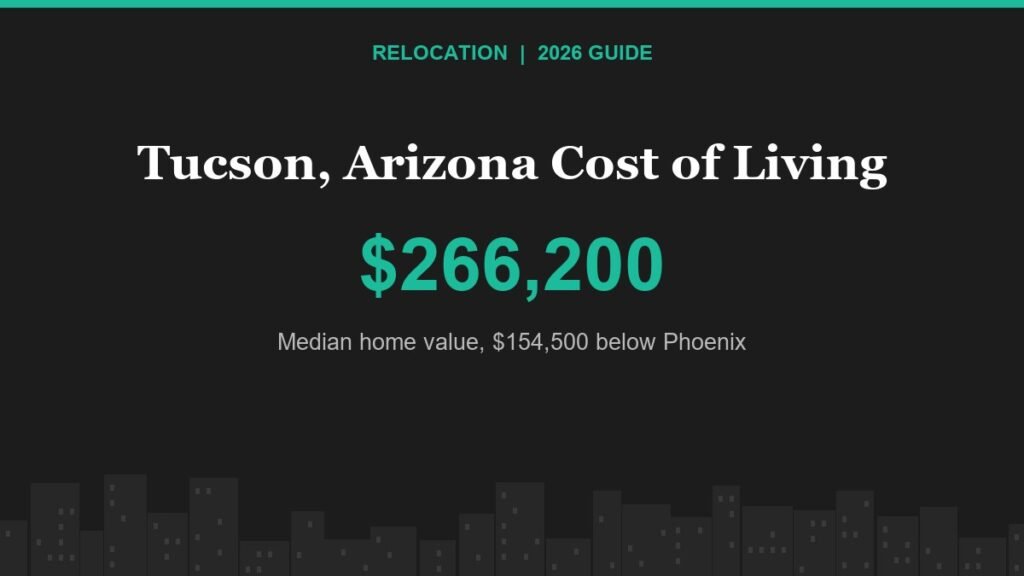
Tucson’s cost of living is low for a large Western city: the median home value is $266,200 and the median one-bedroom rents for $969 a month. That puts Tucson homes $154,500 below Phoenix and $128,300 below the Arizona median, with a flat 2.5% state income tax and an 8.7% combined sales tax.
The catch is lower pay: Tucson’s median household income of $57,073 trails Phoenix and the nation. If you are comparing the desert with the Pacific Northwest, see our guide to whether Oregon is a good place to live.
Tucson Cost of Living at a Glance
| Metric | Tucson | Pima County | Phoenix | United States |
|---|---|---|---|---|
| Median household income | $57,073 | $70,315 | $81,332 | $80,734 |
| Median gross rent | $1,145 | $1,212 | $1,582 | $1,413 |
| 1BR median gross rent | $969 | $1,011 | $1,355 | $1,235 |
| 3BR median gross rent | $1,615 | $1,647 | $1,929 | $1,584 |
| Median home value | $266,200 | $319,700 | $420,700 | $332,700 |
| Median annual property tax | $1,786 | $2,272 | $1,850 | $3,119 |
| Mean commute | 21.9 min | 24.3 min | 25.6 min | 26.4 min |
| Combined sales tax | 8.7% | Varies | 9.1% | Varies |
Housing, income and commute figures are from the Census Bureau’s 2020–2024 American Community Survey. Gross rent includes tenant-paid utilities.
Housing in Tucson
Buying is where Tucson shines. A 10% down payment on the median home is $26,620, compared with $42,070 in Phoenix. The typical owner pays $1,786 a year in property tax, an implied 0.67% of home value. About 51.8% of Tucson households own their home; the University of Arizona and a large renter population keep that share below the county’s 65.2%.
Renters pay $386 a month less than in Phoenix for the median one-bedroom and $314 less for the median three-bedroom.
| Unit | Monthly rent | Annual rent | Income needed at 30% |
|---|---|---|---|
| One-bedroom | $969 | $11,628 | $38,760 |
| Three-bedroom | $1,615 | $19,380 | $64,600 |
The median three-bedroom requires about $64,600 of gross income under the 30% guideline, above Tucson’s $57,073 median household income. These medians include long-term tenants, so new leases often cost more.
Utilities: Electricity and Summer Cooling
Arizona households averaged $160.24 a month for electricity in 2024, above the U.S. average of $142.26, according to the EIA. That is a year-round average, and summer cooling bills run much higher. Most Tucson homes are served by Tucson Electric Power, and on November 17, 2026 the Arizona Corporation Commission approved a rate increase of about 10%, which regulators said would add roughly $13 a month for a typical customer, starting with December bills. Ask for a full year of bills before you buy or rent.
Taxes and Take-Home Pay
Arizona has a flat 2.5% income tax and does not tax Social Security benefits. Tucson’s combined sales tax is 8.7%: 5.6% state, 0.5% for the Regional Transportation Authority and 2.6% city, according to the Pima County Public Library’s rate list. Voters renewed the RTA’s half-cent tax in 2026, replacing the previous one rather than adding to it.
| Single filer, 2026 | $55,000 salary | $80,000 salary |
|---|---|---|
| Federal income tax | $4,420 | $8,770 |
| Social Security and Medicare | $4,208 | $6,120 |
| Arizona income tax (estimate) | $973 | $1,598 |
| Monthly take-home | $3,783 | $5,293 |
| Left after median 1BR | $2,814 | $4,324 |
| Left after median 3BR | $2,168 | $3,678 |
These estimates assume W-2 wages, no dependents, no pre-tax contributions, and the 2026 federal standard deduction of $16,100. We assume Arizona’s standard deduction matches the federal amount, as it did for 2025; the state’s 2026 figure could not be confirmed.
Tucson vs Phoenix Cost of Living
Tucson is cheaper on nearly every housing measure. The median home costs $154,500 less, rents are lower, and sales tax is 8.7% against Phoenix’s 9.1%. Phoenix, however, has a median household income $24,259 higher and a larger, more varied job market. Tucson’s economy leans on the University of Arizona, Davis-Monthan Air Force Base, aerospace and defense, healthcare and tourism.
Tucson also sits about 2,400 feet above sea level, higher than Phoenix, so it is often a few degrees cooler, though summers are still extremely hot. For the full Phoenix picture, read our Phoenix cost of living guide.
What Salary Do You Need to Live in Tucson?
Under the 30% guideline, a single renter needs about $38,760 a year for the median one-bedroom, and a family needs about $64,600 for the median three-bedroom. A single worker earning $55,000 would take home about $3,783 a month and keep $2,814 after the median one-bedroom, before utilities, food and transportation. Most of the Tucson area is car-dependent, so include insurance, fuel and maintenance in your budget, and set aside extra for summer electricity.
Buyers need more. Even with Tucson’s lower prices, the median home at $266,200 means a down payment, closing costs and a mortgage payment that most single earners at the local median income would find tight. Compare current mortgage rates and get preapproved before you shop.
Tucson Suburbs: Marana and Oro Valley
Families often look at Marana, northwest of the city, where the median household income is $112,606 and 83.7% of households own their home. Its median home value of $413,800 is higher than Tucson’s, but homes are newer and many neighborhoods are master-planned. Oro Valley, discussed below, attracts more retirees. Both suburbs mean longer drives to the University of Arizona and downtown Tucson.
Retiring in Tucson, AZ
Tucson is a popular retirement destination. About 21.6% of Pima County residents are 65 or older, compared with 17.2% nationally, according to the 2020–2024 ACS. In the northern suburb of Oro Valley, the share is 35.7%, and the median age is 55.4. Oro Valley’s median home value of $475,700 is well above Tucson’s, but it offers golf, mountain views and newer housing.
Arizona’s tax treatment helps retirees: Social Security is exempt and other retirement income is taxed at the flat 2.5%. Plan for heat, though. The Arizona Department of Health Services publishes heat safety guidance, and the National Weather Service in Tucson issues extreme heat warnings each summer.
How Tucson Compares
| Place | 1BR | 3BR | Home value | Income | Age 65+ |
|---|---|---|---|---|---|
| Tucson | $969 | $1,615 | $266,200 | $57,073 | 16.2% |
| Oro Valley | $1,371 | $1,859 | $475,700 | $107,117 | 35.7% |
| Marana | $1,651 | $1,857 | $413,800 | $112,606 | 21.5% |
| Pima County | $1,011 | $1,647 | $319,700 | $70,315 | 21.6% |
| Phoenix | $1,355 | $1,929 | $420,700 | $81,332 | 12.2% |
| Mesa | $1,382 | $1,948 | $408,000 | $82,752 | 17.5% |
| Arizona | $1,303 | $1,808 | $394,500 | $79,964 | 18.9% |
If you are comparing Arizona with Texas, our upcoming guides to moving to Austin and the cost of living in Galveston cover two very different Texas options with no state income tax.
Frequently Asked Questions
Is Tucson cheaper than Phoenix?
Yes. Tucson’s median home value is $154,500 lower than Phoenix’s, its median one-bedroom rent is $386 a month lower, and its combined sales tax is 8.7% against 9.1%. Phoenix has higher incomes and more jobs, so compare actual job offers before deciding.
What is the cost of living in Tucson, AZ?
Tucson’s median home value is $266,200, its median one-bedroom rent is $969, and the typical owner pays $1,786 a year in property tax. Arizona taxes income at a flat 2.5%. Summer electricity bills are high, and TEP rates rose about 10% in December 2026.
Is Tucson a good place to retire?
Tucson can be a good place to retire for people who want low housing costs, sunshine and favorable taxes. Arizona does not tax Social Security, and other retirement income faces a flat 2.5% rate. About 21.6% of Pima County residents are 65 or older. Extreme summer heat is the main drawback.
This article is for general information only and is not financial, tax, legal, or real estate advice. Taxes, rates, and housing costs change and vary by address and household. Confirm current figures with the relevant agency or a licensed professional before making a decision.