Cost of Living in Eugene, Oregon (2026): Monthly Budget, Rent & Utility Breakdown

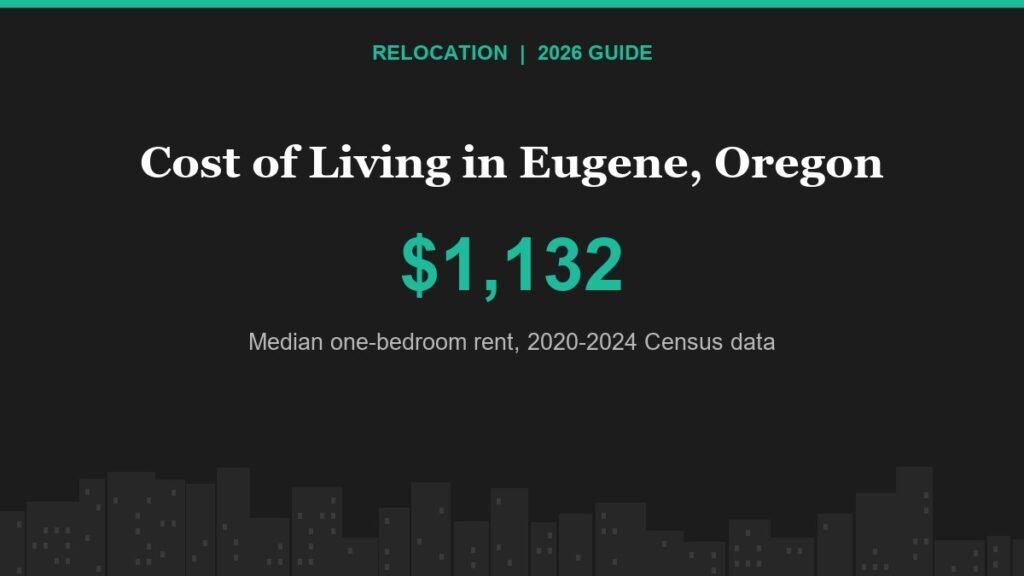
Eugene’s median one-bedroom rent is $1,132 a month, and its median home value is $460,400, which is $17,200 below the Oregon median. Household income is lower too, at $66,562, so the city is cheaper than Portland or Bend without being cheap relative to local pay.
A single worker earning $75,000 would take home about $4,640 a month, leaving about $3,508 after a median one-bedroom. For a statewide view, read our guide to whether Oregon is a good place to live.
Eugene Cost of Living at a Glance
| Metric | Eugene | Oregon | United States |
|---|---|---|---|
| Median household income | $66,562 | $83,011 | $80,734 |
| Median gross rent | $1,402 | $1,525 | $1,413 |
| 1BR median gross rent | $1,132 | $1,301 | $1,235 |
| 3BR median gross rent | $1,764 | $1,850 | $1,584 |
| Median home value | $460,400 | $477,600 | $332,700 |
| Median annual property tax | $4,503 | $3,876 | $3,119 |
| Effective property tax (implied) | 0.98% | 0.81% | 0.94% |
| Homeownership rate | 47.9% | 63.3% | 65.2% |
| Mean commute | 18.4 min | 23.0 min | 26.4 min |
| General sales tax | None | None | Varies |
Housing, income, and commute figures are from the Census Bureau’s 2020–2024 American Community Survey. Gross rent includes tenant-paid utilities.
Rent Prices in Eugene
Eugene’s one-bedroom median is $169 a month below the state figure, while its three-bedroom median of $1,764 is $86 below. As a university city, it has a large rental market, and only 47.9% of households own their home.
| Unit | Monthly rent | Annual rent | Income needed at 30% |
|---|---|---|---|
| One-bedroom | $1,132 | $13,584 | $45,280 |
| Three-bedroom | $1,764 | $21,168 | $70,560 |
Under the common 30% guideline, a median one-bedroom calls for about $45,280 of gross income. A three-bedroom calls for about $70,560, which is above the city’s $66,562 median household income. Families are therefore likely to feel the squeeze more than single renters. These medians include long-term tenants, and listings near the University of Oregon can move with the academic calendar, so start your search early if you plan to arrive in late summer.
Buying a Home in Eugene
A 10% down payment on the median Eugene home comes to $46,040, compared with $47,760 at the statewide median and $71,840 in Bend. The typical owner pays $4,503 a year in property tax, an implied rate of 0.98% of home value.
Oregon taxes assessed value, which can be far below market value because Measure 50 generally limits assessed value growth to 3% a year. The state’s 2025–26 property tax report shows an average Lane County rate of $16.45 per $1,000 of assessed value, or $8.44 per $1,000 of real market value. Those are countywide averages, so check the tax record for the exact address before you make an offer.
Utilities: What EWEB Customers Pay
Most Eugene households get electricity from the customer-owned Eugene Water & Electric Board. EWEB’s 2026 residential rates include a $38.50 monthly basic charge, a 3.99-cent delivery charge, and a 6.83-cent energy charge per kilowatt-hour, or 10.82 cents combined.
| Monthly use | Calculation | Estimated electric bill |
|---|---|---|
| 600 kWh | $38.50 + (600 × $0.1082) | $103.42 |
| 882 kWh (Oregon average) | $38.50 + (882 × $0.1082) | $133.93 |
| 1,600 kWh (EWEB example) | $38.50 + (1,600 × $0.1082) | $211.62 |
The EIA’s 2024 data puts average Oregon household use at 882 kWh a month. All-electric homes in the Willamette Valley can use much more in winter, which is why EWEB’s own example uses 1,600 kWh. Ask for a year of bills, and check whether a rental’s quoted price includes any utilities. EWEB’s 2026 budget announcement also explains how rates are changing.
Take-Home Pay in Eugene
Oregon has no general sales tax, but its income tax reaches 8.75% above $11,400 of taxable income for a single filer. Workers also pay a 0.1% statewide transit tax and a 0.6% Paid Leave Oregon contribution. Eugene adds its own employee payroll tax with rates of 0%, 0.30%, or 0.44% depending on wages. The table below uses the top 0.44% rate, so check the city’s current chart for your pay.
| Single filer, 2026 | $75,000 salary | $110,000 salary |
|---|---|---|
| Federal income tax | $7,670 | $15,370 |
| Social Security and Medicare | $5,738 | $8,415 |
| Oregon income tax | $5,058 | $8,026 |
| Transit tax and Paid Leave | $525 | $770 |
| Eugene payroll tax at 0.44% | $330 | $484 |
| Monthly take-home | $4,640 | $6,411 |
| Left after median 1BR | $3,508 | $5,279 |
| Left after median 3BR | $2,876 | $4,647 |
These estimates assume W-2 wages, no dependents, no pre-tax contributions, and the 2026 federal standard deduction of $16,100.
Jobs in Eugene
The Bureau of Labor Statistics shows education and health services and government as the metro area’s two largest employment sectors, at roughly 31,800 and 31,700 jobs in early 2026. Its preliminary unemployment rate was 4.4% in September 2026, down from 5.4% a year earlier. That rate is not seasonally adjusted and was higher earlier in the year, so job seekers should plan for some variation.
How Eugene Compares
| City | 1BR | 3BR | Home value | Income | Commute |
|---|---|---|---|---|---|
| Eugene | $1,132 | $1,764 | $460,400 | $66,562 | 18.4 min |
| Portland | $1,493 | $2,175 | $581,500 | $90,919 | 24.1 min |
| Salem | $1,067 | $1,909 | $416,900 | $75,487 | 22.0 min |
| Bend | $1,425 | $2,292 | $718,400 | $96,394 | 16.3 min |
| Medford | $1,082 | $1,713 | $417,100 | $73,230 | 16.6 min |
| Corvallis | $1,121 | $1,986 | $502,900 | $65,012 | 16.1 min |
Eugene’s 18.4-minute commute and lower home prices make it a practical alternative to the state’s largest markets. Those drawn to the high desert can compare our Bend cost of living breakdown, and anyone looking farther south should read the Medford cost of living guide. If a bigger job market matters most, our guide to household income in Portland shows what it takes to live there.
Is Eugene a Good Fit for Your Budget?
Eugene tends to work best for single renters, university staff, healthcare and public sector workers, and remote employees who want a smaller city without Bend’s home prices. A $110,000 earner has a comfortable margin after rent, with about $4,647 a month left after a median three-bedroom.
It is harder for a family living on one local paycheck. The median three-bedroom costs $21,168 a year, or 32% of the city’s median household income before taxes. Before you commit, price a real listing, get a year of utility history, confirm whether your job falls inside city limits for payroll tax purposes, and leave room for insurance and car costs.
Frequently Asked Questions
What is the cost of living in Eugene, Oregon?
Eugene is less expensive than Portland and Bend for housing, but still costs more than many U.S. cities to buy in. Its median one-bedroom rent is $1,132, and its median home value is $460,400. Oregon has no general sales tax, although state income tax and a city payroll tax apply.
What salary do you need to live in Eugene?
Using the 30% rent guideline, a median one-bedroom requires about $45,280 in gross income, and a three-bedroom requires about $70,560. A single worker earning $75,000 would take home about $4,640 a month under our estimate, before food, transportation, insurance, and savings.
How much is the electric bill in Eugene?
Under EWEB’s 2026 residential rates, a home using 882 kWh, the Oregon average, would pay about $133.93 a month. EWEB’s own 1,600 kWh example comes to $211.62. Your bill depends on home size, insulation, and whether you heat with electricity, so request a year of statements.
This article is for general information only and is not financial, tax, legal, or real estate advice. Taxes, rates, and housing costs change and vary by address and household. Confirm current figures with the relevant agency or a licensed professional before making a decision.