Retiring in Tennessee (2026): Tax Benefits, Healthcare, Cost of Living & Best Towns

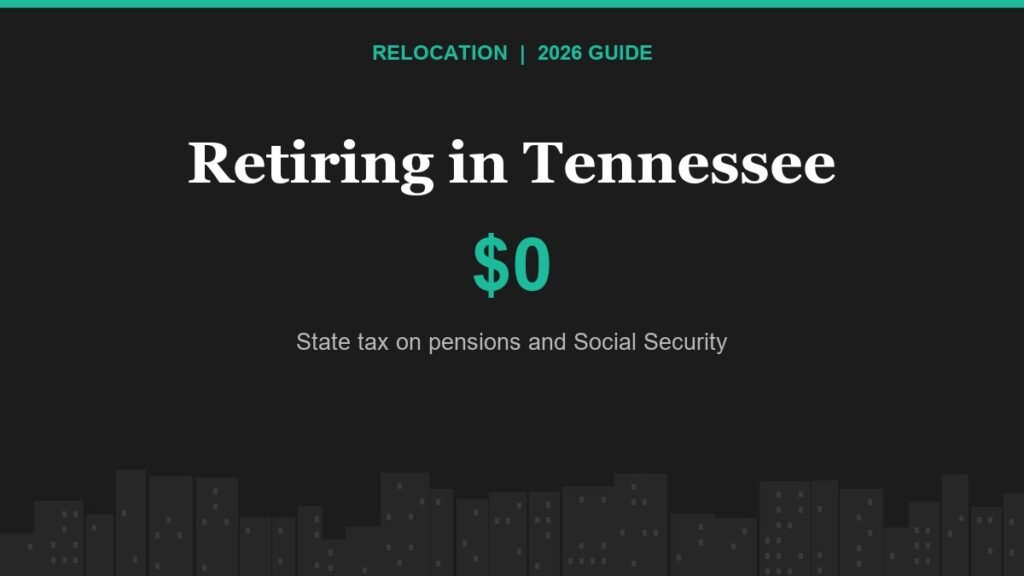
Retiring in Tennessee appeals to people who want low taxes and low housing costs: the state does not tax Social Security, pensions or IRA withdrawals, and the median home value is $286,700, about $46,000 below the national median. The typical Tennessee homeowner pays just $1,442 a year in property tax.
The tradeoff is a high sales tax, which falls hardest on retirees who spend most of their income. If you are weighing Tennessee against the Pacific Northwest, compare our guides to whether Oregon is a good place to live and great places to retire in Oregon.
Tennessee Retirement Taxes at a Glance
| Tax | How Tennessee treats it |
|---|---|
| Social Security | Not taxed |
| Pensions, 401(k) and IRA withdrawals | Not taxed |
| Interest and dividends | Not taxed since the Hall income tax ended in 2021 |
| Inheritance and estate tax | None |
| Sales tax | 7% state plus up to 2.75% local; food 4% state plus local |
| Property tax | Median bill of $1,442 a year |
For a retiree with a pension or large IRA, the income tax savings are substantial compared with a state like Oregon, which taxes that income at up to 9.9%. Combined sales tax rates of 9% or more, however, apply to most purchases, and groceries are still taxed at a reduced state rate of 4% plus local tax.
Cost of Living in Tennessee for Retirees
Housing is Tennessee’s biggest advantage. The median home value of $286,700 compares with $477,600 in Oregon, and the median one-bedroom rents for $1,069. Households headed by someone 65 or older have a median income of $51,886, below the national $58,390, which reflects the state’s lower costs.
Tennessee households averaged $143.32 a month for electricity in 2024, close to the U.S. average of $142.26, according to the EIA. Most of the state gets power from TVA-supplied local utilities, and both summer cooling and winter heating affect bills.
Property Tax Relief and the Tax Freeze
Tennessee offers two programs for older homeowners. The state’s property tax relief program reimburses part of the tax for homeowners 65 or older who meet an income limit. Separately, counties and cities can adopt the property tax freeze, which locks the tax on a qualifying senior’s home at the amount owed when they enroll, even if rates or values rise later.
Freeze income limits vary by county. The Comptroller’s 2026 list shows a minimum standard limit of $38,470, with higher limits in some counties, and some jurisdictions have adopted a higher local-option limit, such as $63,470 in Blount County. Apply through your county trustee.
Best Places to Retire in Tennessee
The towns below are popular with retirees. The table shows each place’s share of residents 65 or older, housing costs and the median income of households headed by someone 65 or older, from the 2020–2024 American Community Survey.
| Place | Age 65+ | Home value | Property tax | 1BR rent | Income, householder 65+ |
|---|---|---|---|---|---|
| Maryville | 18.1% | $358,100 | $2,456 | $835 | $62,078 |
| Crossville | 19.5% | $246,300 | $857 | $488 | $55,714 |
| Sevierville | 18.4% | $289,600 | $1,073 | $1,026 | $56,490 |
| Cleveland | 18.8% | $272,200 | $1,576 | $796 | $45,007 |
| Athens | 17.9% | $225,000 | $1,098 | $617 | $43,710 |
| Johnson City | 15.8% | $268,200 | $1,748 | $796 | $48,761 |
| Chattanooga | 17.3% | $283,200 | $2,265 | $1,163 | $50,374 |
| Knoxville | 14.4% | $239,700 | $1,527 | $996 | $40,720 |
| Cookeville | 13.7% | $305,400 | $1,590 | $731 | $49,087 |
| Nashville | 12.7% | $413,600 | $2,472 | $1,419 | $59,178 |
| Tennessee | 17.1% | $286,700 | $1,442 | $1,069 | $51,886 |
Maryville and the Knoxville Area
Maryville, south of Knoxville near the Great Smoky Mountains, has the highest median income among older households in this table at $62,078, and a median home value of $358,100. Knoxville itself is cheaper at $239,700 and offers large hospitals and a university. North of Knoxville, Powell is a popular unincorporated community for retirees who want suburban neighborhoods with quick access to the city.
Crossville and the Cumberland Plateau
Crossville has the lowest median property tax bill here at $857 and a median home value of $246,300. The Cumberland Plateau’s higher elevation keeps summers a little milder, and the area is known for golf and retirement communities. Specialist care may mean a drive to Knoxville or Nashville.
Sevierville, Johnson City and Chattanooga
Sevierville, near the Smokies, has a median home value of $289,600 and an 18.4% senior share. Johnson City, in the northeast corner of the state, offers lower home values at $268,200 and a regional medical center. Chattanooga combines a revitalized riverfront with a median home value of $283,200.
Nashville
Nashville has the most amenities and the highest housing costs, with a median home value of $413,600. It suits retirees who want city culture and top hospitals and can afford the premium.
A Sample Retirement Budget Comparison
Consider a single retiree with $30,000 of Social Security and $40,000 a year from a pension and IRA withdrawals. In Tennessee, none of that income is subject to state income tax. In Oregon, Social Security is also exempt, but the $40,000 of pension and IRA income is taxable, and most of it falls in the 8.75% bracket. Moving to Tennessee could therefore save that retiree roughly $2,000 or more a year in state income tax, depending on deductions.
Part of the savings goes back in sales tax. A retiree who spends $20,000 a year on taxable goods at a 9.5% combined rate pays about $1,900 in sales tax in Tennessee, compared with nothing in Oregon. Property taxes usually tip the balance further toward Tennessee, where the median bill of $1,442 is $2,434 lower than Oregon’s. Run your own numbers with your actual income mix before deciding.
Healthcare and Medicare
Tennessee’s largest academic medical centers are in Nashville, Knoxville, Memphis and Chattanooga, and regional hospitals serve cities such as Johnson City and Cookeville. Rural and small-town retirees should check drive times to specialists. Tennessee’s free State Health Insurance Assistance Program offers unbiased Medicare counseling and can help you compare plans in a specific county before you move.
Weather and Natural Hazards
Tennessee has four seasons, with hot, humid summers and mild to cool winters. Severe storms, tornadoes and flooding occur, especially in spring, so check flood maps and get an insurance quote for any home. The Tennessee Emergency Management Agency publishes preparedness guidance.
Is Tennessee a Good Place to Retire?
Tennessee is a strong choice for retirees with pension, IRA or investment income, which the state does not tax, and for those who want lower housing costs than the coasts. It is less advantageous for retirees who spend most of their income on taxable goods. If you are also considering Texas, another state with no income tax, see our upcoming guide to first-time homebuyer programs in El Paso and our look at the safest neighborhoods in Arlington, Texas.
Frequently Asked Questions
Does Tennessee tax retirement income?
No. Tennessee does not tax Social Security, pensions, 401(k) distributions or IRA withdrawals, and the Hall tax on interest and dividends ended in 2021. There is also no inheritance or estate tax. Retirees still pay sales tax of 7% plus up to 2.75% local, and property tax on their homes.
What are the best places to retire in Tennessee?
Popular choices include Maryville and the Knoxville area, Crossville on the Cumberland Plateau, Sevierville near the Smokies, Johnson City and Chattanooga. Crossville has the lowest median property tax bill among the places we compared, while Nashville offers the most amenities at the highest housing cost.
What is the cost of living in Tennessee for retirees?
Tennessee’s median home value is $286,700, its median one-bedroom rent is $1,069, and the median property tax bill is $1,442 a year. There is no income tax on retirement income, but combined sales tax rates of 9% or more raise the cost of everyday purchases.
This article is for general information only and is not financial, tax, legal, or real estate advice. Taxes, rates, and housing costs change and vary by address and household. Confirm current figures with the relevant agency or a licensed professional before making a decision.