Living in Snoqualmie, WA (2026): Home Prices, Commute, Schools & Flood Risk

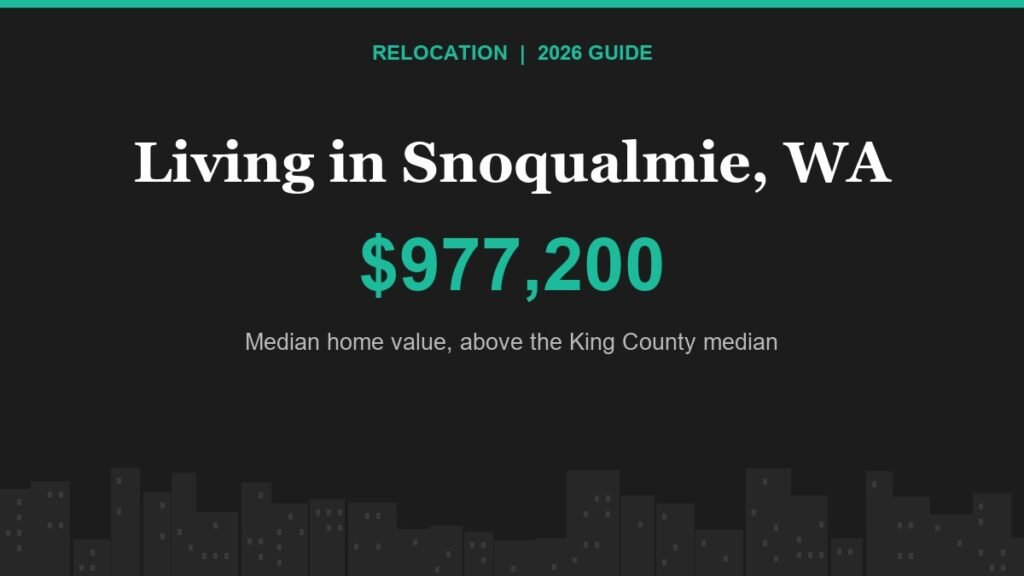
Living in Snoqualmie, WA means paying King County prices for a newer, family-oriented suburb at the foot of the Cascades: the median home value is $977,200, and 55% of households include children. The city sits about 30 miles east of Seattle on Interstate 90, beside Snoqualmie Falls, and most of its homes are on Snoqualmie Ridge, a planned community built mainly since the late 1990s.
The trade-offs are cost, a longer commute and flood risk in the historic downtown. For the statewide picture on taxes and costs, read our guide to the pros and cons of living in Washington State.
Snoqualmie at a Glance
| Metric | Snoqualmie | King County | Washington | United States |
|---|---|---|---|---|
| Population | 13,798 | 2,287,171 | 7,816,116 | 334,922,500 |
| Median household income | $214,107 | $124,746 | $98,141 | $80,734 |
| Median home value | $977,200 | $859,900 | $564,600 | $332,700 |
| Median gross rent | $2,938 | $2,092 | $1,760 | $1,413 |
| Median annual property tax | $8,316 | $7,114 | $4,556 | $3,119 |
| Households with children | 54.7% | 26.8% | 29.3% | 29.5% |
| Homes built 2000 or later | 76.5% | 29.5% | 29.4% | 25.1% |
| Homeowners | 85.1% | 55.4% | 63.8% | 65.2% |
| Mean commute | 29.0 min | 27.6 min | 26.6 min | 26.4 min |
Source: Census Bureau American Community Survey, 2020–2024, via Census Reporter. Small-city estimates carry wide margins of error; Snoqualmie’s median income is accurate to roughly plus or minus $35,000.
Housing: Newer Homes at King County Prices
Snoqualmie’s median home value is $117,300 above the King County median, but below nearby North Bend ($1,048,600) and Sammamish ($1,407,300). A 10% down payment on the median home is about $97,720. Typical owners pay $8,316 a year in property tax, an implied 0.85% of home value.
The housing stock is unusually new: 77% of homes were built in 2000 or later, against 30% countywide. That means fewer fixer-uppers and more homeowners’ associations, garages and sidewalks. About 85.1% of households own their home, so the rental market is small, and the median gross rent of $2,938 is above the county median.
Taxes and Take-Home Pay
Washington does not tax wages. The Department of Revenue’s October–December 2026 rate list puts Snoqualmie’s combined sales tax at 9.3%, lower than Seattle’s 10.55% because Snoqualmie sits outside the Sound Transit taxing district. Workers pay the Paid Family and Medical Leave premium, about 0.81% of wages, and the 0.58% WA Cares premium. Puget Sound Energy supplies most homes; Washington households averaged $113.68 a month for electricity in 2024, according to the EIA.
| Single filer, 2026 | $100,000 salary | $150,000 salary |
|---|---|---|
| Federal income tax | $13,170 | $24,734 |
| Social Security and Medicare | $7,650 | $11,475 |
| Paid Leave and WA Cares | $1,387 | $2,081 |
| Monthly take-home | $6,483 | $9,309 |
| Left after median rent | $3,545 | $6,371 |
These estimates assume W-2 wages, no dependents, no pre-tax contributions, and the 2026 federal standard deduction of $16,100.
Commute and Jobs
Most working residents commute west on I-90 to Issaquah, Bellevue, Redmond or Seattle. The mean commute is 29.0 minutes, a little longer than the county average, and winter weather on the I-90 corridor can slow trips. The Bureau of Labor Statistics reports an average weekly wage of $2,739 in King County for the first quarter of 2026, about $142,428 a year, well above the statewide $1,998, which helps explain the area’s household incomes. Newcomers have 30 days to get a Washington driver license and register vehicles.
Schools and Family Life
Snoqualmie is served by the Snoqualmie Valley School District, whose main high school is Mount Si High School. Test scores, graduation rates and enrollment for each school are published on the state’s Washington School Report Card. With more than half of households raising children, parks, trails and youth sports are central to life on the Ridge.
Flood Risk in Downtown Snoqualmie
The Snoqualmie River runs through the historic downtown, and the city’s flood and storm resources explain that much of downtown lies in the floodplain. The city participates in FEMA’s Community Rating System, which lowers flood insurance premiums for residents, and its hazard mitigation page describes grants for elevating or buying out homes in the floodplain. Snoqualmie Ridge sits on higher ground, but buyers anywhere in the valley should check flood maps and insurance costs before making an offer.
Outdoor Life
Snoqualmie Falls, which drops 268 feet, is on the edge of town. Hiking at Rattlesnake Ledge and Mount Si, trail running, mountain biking and skiing at Snoqualmie Pass are all close by. The cost is a wetter, cooler climate than Seattle’s, with more snow at times.
Snoqualmie vs North Bend
North Bend, a few miles east along the river, is Snoqualmie’s closest alternative. Its median home value is $1,048,600, $71,400 higher than Snoqualmie’s, but its homes are older on average: 35% were built in 2000 or later. Snoqualmie has the higher share of households with children (55% against 36%), while North Bend’s median age is 39.4, against 38.9 in Snoqualmie. North Bend’s combined sales tax is 9.2%. Both towns share the school district, the I-90 commute and the valley’s flood planning.
Who Snoqualmie Suits Best
Snoqualmie works best for households with Eastside or Seattle salaries who want a newer home, a yard and quick access to trails, and who can accept a longer drive to work. It suits remote and hybrid workers especially well. It is a harder fit for single renters, buyers on a tight budget and anyone who wants city nightlife within walking distance.
How Snoqualmie Compares
| Place | Home value | Median rent | Income | Households with kids | Commute |
|---|---|---|---|---|---|
| Snoqualmie | $977,200 | $2,938 | $214,107 | 55% | 29.0 min |
| North Bend | $1,048,600 | $2,091 | $175,109 | 36% | 27.5 min |
| Issaquah | $963,000 | $2,590 | $154,669 | 30% | 25.3 min |
| Sammamish | $1,407,300 | $2,857 | $239,690 | 51% | 29.3 min |
| Bellevue | $1,340,300 | $2,572 | $165,576 | 29% | 23.6 min |
| Seattle | $938,600 | $2,030 | $123,860 | 17% | 26.0 min |
| King County | $859,900 | $2,092 | $124,746 | 27% | 27.6 min |
If Snoqualmie is out of budget, compare our guide to moving to Bremerton for a ferry commute at lower prices, our Tacoma cost of living guide for South Sound value, or our look at whether Port Townsend is a good place to live for a slower, smaller town.
Frequently Asked Questions
Is Snoqualmie, WA a good place to live?
For families with Eastside or Seattle incomes, often yes. Snoqualmie offers newer homes, a high share of households with children, outdoor access and a lower sales tax than Seattle. The drawbacks are high home prices, a longer I-90 commute, a small rental market and flood risk in the historic downtown.
How expensive is it to live in Snoqualmie?
Snoqualmie is expensive. The median home value is $977,200, above the King County median, and the median gross rent is $2,938. Typical owners pay about $8,316 a year in property tax, and the combined sales tax rate is 9.3%. Household incomes are high too, which keeps demand strong.
How far is Snoqualmie from Seattle?
Snoqualmie is about 30 miles east of downtown Seattle on Interstate 90. Drive times vary widely with traffic and weather, and many residents work closer, in Issaquah, Bellevue or Redmond. The city’s mean commute is 29.0 minutes, slightly longer than the King County average.
Does Snoqualmie flood?
Parts of it do. Much of the historic downtown sits in the Snoqualmie River floodplain, and the city offers flood resources and home elevation grants. Snoqualmie Ridge is on higher ground. Check flood maps and insurance quotes for any address before buying in the valley.
This article is for general information only and is not financial, tax, legal, or real estate advice. Taxes, rates, and housing costs change and vary by address and household. Confirm current figures with the relevant agency or a licensed professional before making a decision.