Madison, WI vs Grand Rapids, MI: Cost of Living Comparison for 2026

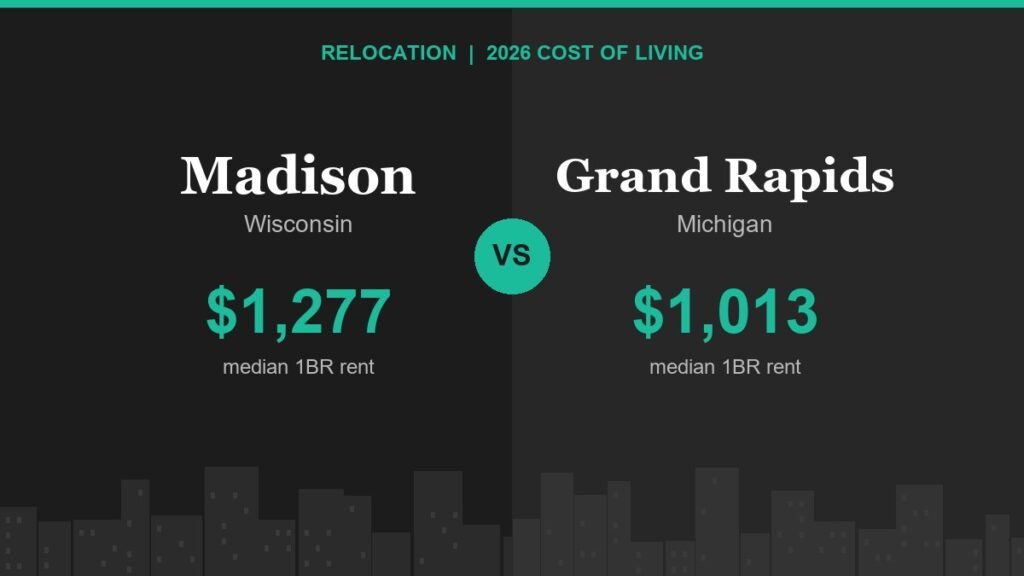
Grand Rapids is the cheaper city, with one-bedroom rent $264 a month below Madison’s and a typical property tax bill $4,048 a year lower. Madison claws some of that back on income tax: a single filer earning $75,000 owes about $2,944 to Wisconsin, compared with about $4,053 in Michigan and Grand Rapids city tax combined.
That $1,109 income tax gap is real, but it covers only part of the housing difference. For how both cities compare with 21 others, see our mid-size city relocation cost guide.
Madison vs Grand Rapids: Quick Cost Comparison
| Metric | Madison, WI | Grand Rapids, MI | Winner / Difference |
|---|---|---|---|
| 1BR median gross rent | $1,277 | $1,013 | Grand Rapids by $264/mo |
| 3BR median gross rent | $1,795 | $1,530 | Grand Rapids by $265/mo |
| State and city income tax on $75,000 | $2,944 | $4,053 | Madison by $1,109 |
| State and city income tax on $110,000 | $5,021 | $6,065 | Madison by $1,044 |
| Effective property tax (implied) | 1.75% | 1.02% | Grand Rapids |
| Median annual property tax | $6,541 | $2,493 | Grand Rapids by $4,048 |
| Median home value | $372,900 | $244,500 | Grand Rapids by $128,400 |
| Sales tax | 5.5% | 6% | Madison by 0.5 pt |
| Avg. monthly electric (state) | $110.87 | $119.31 | Wisconsin by $8.44 |
| Avg. monthly internet | No official city figure | No official city figure | Compare by address |
| Mean commute | 19.4 min | 19.0 min | Grand Rapids by 0.4 min |
| Median household income | $78,050 | $69,108 | Madison by $8,942 |
Housing, income, and commute figures are from the Census Bureau’s 2020–2024 American Community Survey. Gross rent includes tenant-paid utilities. Electric bills are 2024 statewide averages from the EIA.
Income Tax: Wisconsin’s High Rate Is Misleading
Wisconsin’s 7.65% top rate gets the headlines, but it starts above $332,720 of taxable income for a single filer. At these salaries, most income falls in the 3.50%, 4.40%, and 5.30% brackets. The state’s 2026 estimated tax instructions also provide a $700 personal exemption, and the Tax Foundation’s 2026 table shows a single standard deduction of up to $13,960 that phases down as income rises.
Michigan has a flat 4.25% rate for 2026 and a $5,900 personal exemption. Grand Rapids adds a 1.5% city income tax for residents, with a $600 exemption. Nonresidents who work in the city pay 0.75%.
| Single filer, 2026 | $75,000 salary | $110,000 salary |
|---|---|---|
| Federal income tax | $7,670 | $15,370 |
| Social Security and Medicare | $5,738 | $8,415 |
| Wisconsin income tax | $2,944 | $5,021 |
| Michigan income tax | $2,937 | $4,424 |
| Grand Rapids city income tax | $1,116 | $1,641 |
| Take-home in Madison | $58,649 | $81,194 |
| Take-home in Grand Rapids | $57,540 | $80,150 |
These estimates assume W-2 wages, no dependents, no pre-tax contributions, and the 2026 federal standard deduction of $16,100. Credits such as Wisconsin’s school property tax credit are not included.
Rent: A Steady $265 Gap
Grand Rapids saves about the same amount at either size: $3,168 a year on a one-bedroom and $3,180 on a three-bedroom. After the income tax difference, renters still come out ahead there:
- $75,000, one-bedroom: Grand Rapids is ahead by about $2,059 a year.
- $75,000, three-bedroom: Grand Rapids is ahead by about $2,071 a year.
- $110,000, three-bedroom: Grand Rapids is ahead by about $2,136 a year.
These medians include long-term tenants, so a new lease may cost more. Madison’s large university population also keeps demand high for apartments near campus and downtown.
Property Tax: The Biggest Number in This Comparison
Madison has the highest median property tax bill of the 23 cities we track. Its typical owner pays $6,541 a year, an implied rate of 1.75%, while Grand Rapids owners pay $2,493, or 1.02%. At an identical $300,000 price, those rates suggest about $5,262 in Madison and $3,059 in Grand Rapids, a $2,203 difference.
For a buyer earning $75,000, Grand Rapids would still be about $1,094 a year ahead after income and property tax. At $110,000, the lead is about $1,159. Madison’s values are also moving: the city reports a 2026 average assessed home value of $481,300, well above the Census median.
Michigan buyers need one extra warning. A longtime owner’s taxable value can sit well below market, and it generally resets after a sale, so a seller’s bill may understate yours. Claim Michigan’s Principal Residence Exemption, which removes up to 18 mills of school operating tax, and use the city’s property tax estimator before making an offer.
Buying a Home and Everyday Costs
The median Madison home costs $128,400 more than the median Grand Rapids home. On a 10% down payment, that is about $12,840 more cash at closing, plus a larger mortgage. Madison’s $8,942 higher household income offsets some of that premium for local workers, but a remote worker paid from elsewhere does not get that benefit.
Daily costs lean slightly toward Madison. Dane County shoppers pay 5% state tax plus 0.5% county tax, while Michigan charges a flat 6% with no local sales tax. Wisconsin’s average electric bill is also $8.44 a month lower, or about $101 a year.
Which City Should You Choose?
Choose Grand Rapids if you want lower rent, a cheaper home, and a much smaller property tax bill. Choose Madison if a local employer pays enough to cover the housing premium. Midwest movers can also compare our Carmel and Fishers property tax analysis, the Des Moines and Omaha income tax guide, and the Fort Wayne and Grand Rapids cost comparison.
More city comparisons: Huntsville vs Chattanooga cost of living, Bentonville vs Tulsa for remote workers, and Fayetteville vs Springfield housing costs.
Frequently Asked Questions
Is Madison or Grand Rapids cheaper to live in?
Grand Rapids is cheaper for most households. Its rent is about $265 a month lower at one and three bedrooms, its median home value is $128,400 lower, and its typical property tax bill is $4,048 lower. Madison has lower income tax at common salaries, but that offsets only part of the difference.
Does Grand Rapids have a city income tax?
Yes. Grand Rapids charges residents 1.5% and nonresidents who work in the city 0.75%, with a $600 exemption. A single resident earning $75,000 pays about $1,116 in city tax on top of about $2,937 in Michigan income tax. Madison has no city income tax.
Why are Madison property taxes so high?
Wisconsin relies heavily on local property taxes for schools and municipal services, and Madison’s home values are relatively high. The median owner pays $6,541 a year, the highest of the 23 cities in our comparison. Credits can reduce a bill, so check the actual tax record for any home you consider.
This article is for general information only and is not financial, tax, legal, or real estate advice. Tax estimates are simplified and rates vary by address and household. Confirm current figures with the relevant agency or a licensed professional before making a decision.