Fort Wayne, IN vs Grand Rapids, MI: Cost of Living in 2026

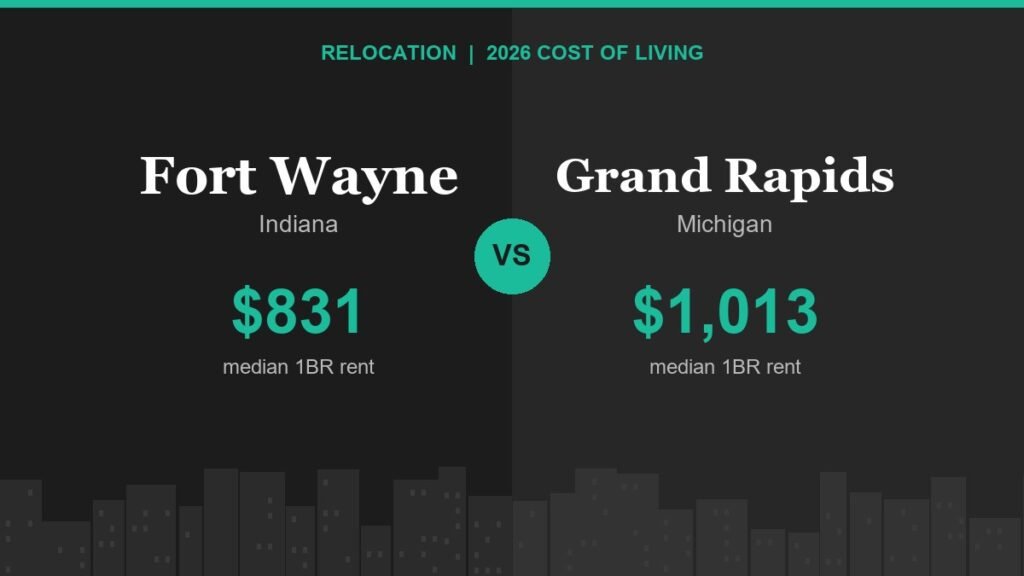
Fort Wayne is the cheaper city, with three-bedroom rent $393 a month below Grand Rapids and a median home value $55,600 lower. It also wins on income tax: a single resident earning $75,000 pays about $3,405 in Indiana state and county tax, compared with about $4,053 in Michigan and Grand Rapids city tax.
Grand Rapids counters with higher household income, shorter commutes, and lower sales tax. To see where both cities land among 23 markets, use our mid-size city cost of living guide.
Fort Wayne vs Grand Rapids: Quick Cost Comparison
| Metric | Fort Wayne, IN | Grand Rapids, MI | Winner / Difference |
|---|---|---|---|
| 1BR median gross rent | $831 | $1,013 | Fort Wayne by $182/mo |
| 3BR median gross rent | $1,137 | $1,530 | Fort Wayne by $393/mo |
| State and local income tax on $75,000 | $3,405 | $4,053 | Fort Wayne by $648 |
| State and local income tax on $110,000 | $4,994 | $6,065 | Fort Wayne by $1,071 |
| Effective property tax (implied) | 0.84% | 1.02% | Fort Wayne |
| Median annual property tax | $1,578 | $2,493 | Fort Wayne by $915 |
| Median home value | $188,900 | $244,500 | Fort Wayne by $55,600 |
| Sales tax | 7% | 6% | Grand Rapids by 1 pt |
| Avg. monthly electric (state) | $133.06 | $119.31 | Michigan by $13.75 |
| Avg. monthly internet | No official city figure | No official city figure | Compare by address |
| Mean commute | 21.5 min | 19.0 min | Grand Rapids by 2.5 min |
| Median household income | $61,422 | $69,108 | Grand Rapids by $7,686 |
Housing, income, and commute figures are from the Census Bureau’s 2020–2024 American Community Survey. Gross rent includes tenant-paid utilities. Electric bills are 2024 statewide averages from the EIA.
Income Tax: Both Cities Add a Local Layer
Neither city stops at a state income tax. Indiana’s 2026 individual rate is 2.95%, and the state’s county rate notice lists Allen County at 1.59%, for a combined 4.54% before exemptions. Michigan’s flat 2026 rate is 4.25% with a $5,900 personal exemption, and Grand Rapids adds a 1.5% resident income tax with a $600 exemption.
| Single filer, 2026 | $75,000 salary | $110,000 salary |
|---|---|---|
| Federal income tax | $7,670 | $15,370 |
| Social Security and Medicare | $5,738 | $8,415 |
| Indiana state and Allen County tax | $3,405 | $4,994 |
| Michigan state tax | $2,937 | $4,424 |
| Grand Rapids city tax | $1,116 | $1,641 |
| Take-home in Fort Wayne | $58,188 | $81,221 |
| Take-home in Grand Rapids | $57,540 | $80,150 |
These estimates assume W-2 wages, no dependents, no pre-tax contributions, and the 2026 federal standard deduction of $16,100. Indiana’s personal exemption would lower the Fort Wayne figure slightly. A person who lives outside Grand Rapids but works in the city pays the 0.75% nonresident rate instead, which can change the math for suburban households.
Rent: Fort Wayne’s Largest Advantage
Fort Wayne has the lowest three-bedroom median of the 23 cities we track. It saves a one-bedroom renter $2,184 a year and a three-bedroom renter $4,716. With lower income tax on top, the advantages stack:
- $75,000, one-bedroom: Fort Wayne is ahead by about $2,832 a year.
- $75,000, three-bedroom: Fort Wayne is ahead by about $5,364 a year.
- $110,000, three-bedroom: Fort Wayne is ahead by about $5,787 a year.
These medians include long-term tenants, so a new lease may cost more in either city. Families get the most from this comparison, because the gap more than doubles when you move from one bedroom to three.
Property Tax: Lower Bills in Allen County
Fort Wayne’s typical owner pays $1,578 a year, an implied rate of 0.84%. Grand Rapids owners pay $2,493, or 1.02%. At an identical $250,000 price, those rates suggest about $2,088 in Fort Wayne and $2,549 in Grand Rapids, a $461 difference.
Indiana’s headline rates look much higher than the actual bills. The state’s 2026 certified rates list $2.8975 per $100 for the Fort Wayne–Wayne Township district, but homestead deductions and a 1% cap on homestead property reduce what most owners pay. Allen County’s 2026 tax comparison also shows Fort Wayne’s rate falling 0.64% even as its levy rose about 4%, because net assessed value grew faster.
Michigan works differently. A longtime owner’s taxable value can sit below market and generally resets after a sale, so a Grand Rapids seller’s bill may understate yours. Claim the Principal Residence Exemption, which removes up to 18 mills of school operating tax, and run the address through the city’s property tax estimator.
For a buyer earning $75,000 at the same $250,000 price, Fort Wayne comes out about $1,108 a year ahead after income and property tax. At $110,000, the lead is about $1,532.
Buying and Everyday Costs
On a 10% down payment, the median Fort Wayne home needs about $5,560 less cash at closing than the median Grand Rapids home. Grand Rapids’ $7,686 higher household income can offset that for workers with local jobs, so compare actual offers if your pay depends on where you live.
Grand Rapids wins several smaller categories. Michigan’s 6% sales tax has no local add-on, compared with Indiana’s 7% statewide rate, which is $100 less on every $10,000 of taxable purchases. Michigan’s average electric bill is $13.75 a month lower, or $165 a year, and the mean commute is 2.5 minutes shorter each way, saving about 21 hours over 250 workdays.
Which City Should You Choose?
Choose Fort Wayne if you want the lowest housing costs, need three bedrooms, or are moving with a remote salary. Choose Grand Rapids if a local employer pays enough to cover the difference, or if a shorter commute matters to you. Midwest movers can also compare the Carmel and Fishers suburban cost guide, the Des Moines and Omaha tax breakdown, and the Madison and Grand Rapids comparison.
More city comparisons: Huntsville vs Chattanooga cost of living, Fayetteville vs Springfield housing costs, and Bentonville vs Tulsa for remote workers.
Frequently Asked Questions
Is Fort Wayne or Grand Rapids cheaper to live in?
Fort Wayne is cheaper for most households. Its one-bedroom rent is $182 a month lower, its three-bedroom rent is $393 lower, and its median home value is $55,600 lower. Grand Rapids has lower sales tax and electric bills, but those savings are much smaller than the housing difference.
Do Fort Wayne and Grand Rapids have local income taxes?
Yes. Allen County residents pay a 1.59% county income tax on top of Indiana’s 2.95% rate. Grand Rapids residents pay a 1.5% city income tax on top of Michigan’s 4.25% rate. A single filer earning $75,000 pays about $648 less in Fort Wayne.
Which city has lower property taxes?
Fort Wayne does. Its median owner pays $1,578 a year compared with $2,493 in Grand Rapids, and its implied rate is lower at 0.84% against 1.02%. Actual bills depend on the taxing district and homestead status, so check the specific parcel before making an offer on a home.
This article is for general information only and is not financial, tax, legal, or real estate advice. Tax estimates are simplified and rates vary by address and household. Confirm current figures with the relevant agency or a licensed professional before making a decision.