Is Tacoma, Washington a Good Place to Live in 2026? Cost, Commute & Pros/Cons

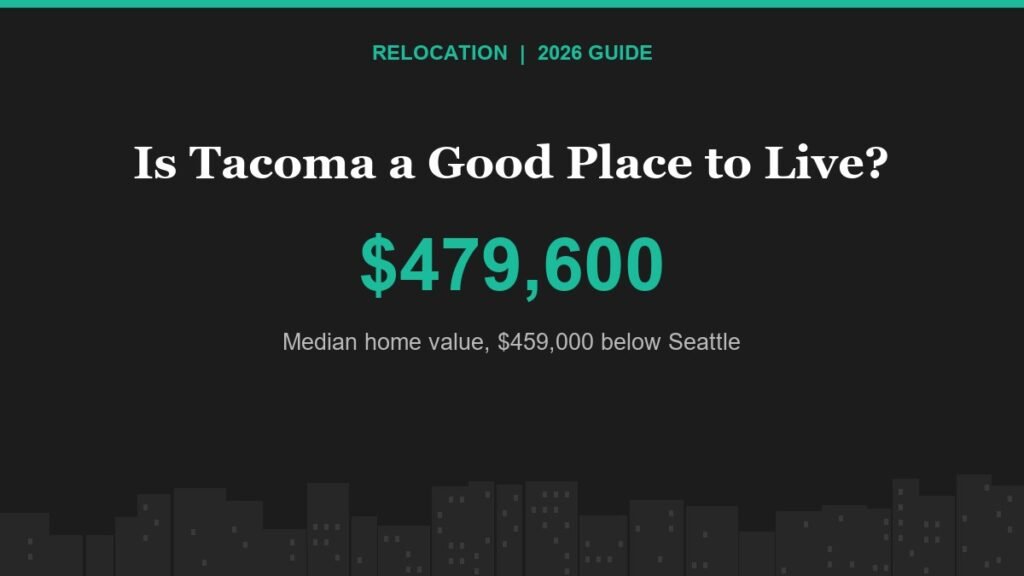
Tacoma is a good place to live for people who want Puget Sound access at a lower price than Seattle: its median home value is $479,600, which is $459,000 less than Seattle’s, and the median one-bedroom rents for $1,417. Washington has no income tax on wages, though Tacoma’s combined sales tax is 10.5%.
The tradeoffs are a long commute for anyone working in Seattle, lower local wages, and some of the state’s higher sales tax. For a full look at taxes and costs statewide, see our guide to the pros and cons of living in Washington State.
Tacoma Cost of Living at a Glance
| Metric | Tacoma | Seattle | Washington | United States |
|---|---|---|---|---|
| Median household income | $85,884 | $123,860 | $98,141 | $80,734 |
| Median gross rent | $1,676 | $2,030 | $1,760 | $1,413 |
| 1BR median gross rent | $1,417 | $1,899 | $1,568 | $1,235 |
| 3BR median gross rent | $2,190 | $3,056 | $2,058 | $1,584 |
| Median home value | $479,600 | $938,600 | $564,600 | $332,700 |
| Median annual property tax | $4,482 | $7,337 | $4,556 | $3,119 |
| Mean commute | 28.8 min | 26.0 min | 26.6 min | 26.4 min |
| Combined sales tax | 10.5% | 10.55% | 6.5% + local | Varies |
Housing, income and commute figures are from the Census Bureau’s 2020–2024 American Community Survey. Sales tax rates are from the Department of Revenue’s October–December 2026 rate list.
Tacoma Cost of Living vs Seattle
Housing is where Tacoma wins. The median home costs $459,000 less than in Seattle, so a 10% down payment is $47,960 instead of $93,860. Renters save $482 a month on the median one-bedroom and $866 on the median three-bedroom, or $10,392 a year.
Tacoma’s median home value is also $85,000 below the Washington median. The typical owner pays $4,482 a year in property tax, an implied 0.93% of home value, and about 55.8% of households own their home.
Incomes are lower, though. Tacoma’s median household income is $37,976 below Seattle’s, so the savings are biggest for people who keep a Seattle-area salary or work remotely.
Commute: The Real Tradeoff
Tacoma’s 28.8-minute mean commute is longer than Seattle’s 26.0 minutes. Census commute data show that 11.7% of Tacoma workers travel an hour or more each way, compared with 5.6% in Seattle and 8.8% statewide, according to the 2020–2024 ACS. Downtown Seattle is roughly 35 miles north on Interstate 5, one of the region’s most congested corridors.
Transit options are improving slowly. Sound Transit’s Sounder commuter rail runs between Tacoma and Seattle on weekdays, and the light rail extension to the Tacoma Dome is currently expected to open in 2035. Until then, test the commute at rush hour before you sign a lease.
What Salary Do You Need to Live in Tacoma?
Under the common guideline of spending no more than 30% of gross income on rent, the median one-bedroom requires about $56,680 a year, and the median three-bedroom requires about $87,600. The three-bedroom figure is above Tacoma’s $85,884 median household income, so many families rely on two incomes or look at nearby suburbs.
Those suburbs are not much cheaper. Puyallup’s median home value is $551,800 and Auburn’s is $547,900, both above Tacoma’s, although their household incomes are higher too. Census medians include long-term tenants, so a new lease will usually cost more than these figures.
Taxes and Take-Home Pay
There is no state income tax on wages. Workers pay the Paid Family and Medical Leave premium, about 0.81% of wages as the employee share in 2026, and the 0.58% WA Cares premium.
| Single filer, 2026 | $75,000 salary | $110,000 salary |
|---|---|---|
| Federal income tax | $7,670 | $15,370 |
| Social Security and Medicare | $5,738 | $8,415 |
| Paid Leave and WA Cares | $1,040 | $1,526 |
| Monthly take-home | $5,046 | $7,057 |
| Left after median 1BR | $3,629 | $5,640 |
| Left after median 3BR | $2,856 | $4,867 |
These estimates assume W-2 wages, no dependents, no pre-tax contributions, and the 2026 federal standard deduction of $16,100. At 10.5%, sales tax adds $105 to every $1,000 of taxable purchases, although most groceries and prescription drugs are exempt.
Jobs and Wages
The Bureau of Labor Statistics reports an average weekly wage of $1,459 in Pierce County for the first quarter of 2026, about $75,868 a year. In King County, which includes Seattle, it was $2,739, about $142,428. That gap is why so many Tacoma residents commute north.
Pierce County’s own economy includes the Port of Tacoma, healthcare systems, Joint Base Lewis-McChord, logistics and public employers. Military families make up a significant part of the local rental market.
Utilities and Natural Hazards
Washington households averaged $113.68 a month for electricity in 2024, below the U.S. average of $142.26, according to the EIA. Tacoma Power, a city-owned utility, serves much of the city.
Tacoma shares western Washington’s earthquake risk, and the river valleys to its southeast carry a hazard most newcomers have not heard of: lahars, or volcanic mudflows, from Mount Rainier. The USGS says the Puyallup River valley is especially exposed, and its 2026 guide for residents advises checking whether your home, school or regular routes lie in a lahar hazard zone. This matters more if you are looking at Puyallup, Sumner or Orting than central Tacoma.
Is Tacoma, WA a Good Place to Live? Pros and Cons
Pros: far cheaper housing than Seattle, no wage income tax, waterfront parks and views of Mount Rainier, museums including the Museum of Glass, and lower electricity bills than the national average.
Cons: a 10.5% sales tax, long commutes to Seattle jobs, lower local wages, and earthquake and lahar risk in parts of the region. Crime is another common concern; we cover it in our report on whether Tacoma, Washington is safe.
How Tacoma Compares
| Place | 1BR | 3BR | Home value | Income | Commute |
|---|---|---|---|---|---|
| Tacoma | $1,417 | $2,190 | $479,600 | $85,884 | 28.8 min |
| Seattle | $1,899 | $3,056 | $938,600 | $123,860 | 26.0 min |
| Puyallup | $1,654 | $2,090 | $551,800 | $97,826 | 31.4 min |
| Auburn | $1,583 | $2,215 | $547,900 | $97,884 | 30.5 min |
| Olympia | $1,341 | $2,025 | $486,200 | $81,302 | 20.0 min |
| Bremerton | $1,328 | $2,084 | $439,400 | $74,940 | 25.3 min |
| Bellingham | $1,339 | $2,125 | $627,500 | $66,755 | 18.1 min |
| Washington | $1,568 | $2,058 | $564,600 | $98,141 | 26.6 min |
Tacoma is one of the most affordable large cities in the Puget Sound region. If you are comparing it with smaller Washington cities, read our Bellingham cost of living guide and our Port Angeles cost of living guide. New residents have 30 days to get a Washington driver license and register vehicles.
Frequently Asked Questions
Is Tacoma, WA a good place to live?
Tacoma is a good place to live for people who want lower housing costs than Seattle while staying in the Puget Sound region. Its median home value is $479,600, and there is no state income tax on wages. The main drawbacks are long commutes to Seattle, a 10.5% sales tax and lower local wages.
Is Tacoma cheaper than Seattle?
Yes. Tacoma’s median home value is $459,000 lower than Seattle’s, and its median one-bedroom rent is $482 a month lower. Sales tax is nearly identical, at 10.5% in Tacoma and 10.55% in Seattle. Seattle pays more, so compare take-home pay against housing costs before deciding.
How long is the commute from Tacoma to Seattle?
Downtown Seattle is roughly 35 miles from Tacoma, and rush-hour traffic on Interstate 5 can make the drive far longer than off-peak. Sounder commuter rail runs on weekdays. Census data show that 11.7% of Tacoma workers commute an hour or more each way, compared with 5.6% of Seattle workers.
This article is for general information only and is not financial, tax, legal, or real estate advice. Taxes, rates, and housing costs change and vary by address and household. Confirm current figures with the relevant agency or a licensed professional before making a decision.